
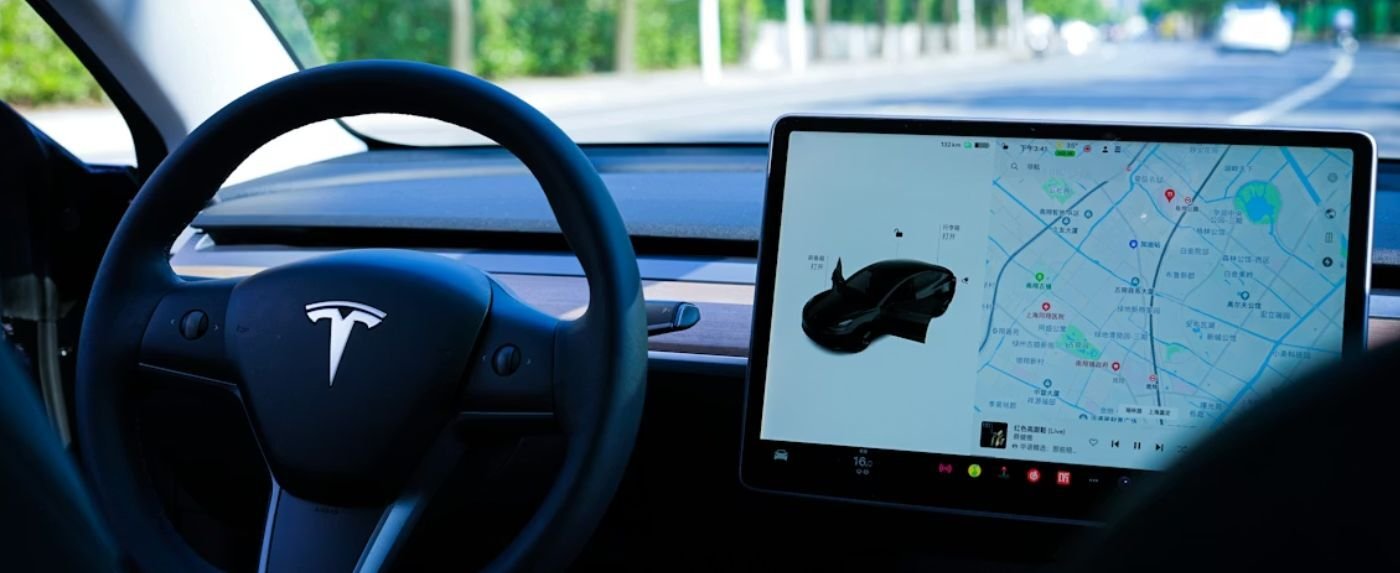
Tesla’s Full Self-Driving (FSD) system collects billions of miles of data from its global fleet. Each car acts as a real-time sensor, sending information on traffic conditions, road layouts, pedestrian behavior, and driver interactions to Tesla’s neural networks. Unlike other automakers who rely heavily on simulations or controlled tests, Tesla FSD learns from actual, unpredictable driving conditions, giving it a massive real-world advantage.
The system handles edge cases like emergency braking, sudden lane changes, and complex intersections, continually improving with each mile. Tesla’s ability to transform raw fleet data into actionable intelligence is unmatched, creating a compounding learning effect that keeps the system ahead of competitors.
Table of Contents
ToggleHardware-Software Integration
Tesla’s vertical integration sets FSD apart. The AI5 chip, cameras, radar, ultrasonic sensors, and Tesla FSD v14 software work as a unified system. This integration allows for seamless coordination between hardware and software, enabling quicker reaction times, smoother lane changes, and enhanced safety.
Features such as the Tesla FSD speed limit offset automatically adjust vehicle speed according to traffic laws and road conditions, balancing efficiency and safety. Legacy automakers struggle to match this precision because their systems often rely on third-party components and fragmented software stacks.
Tesla Earnings Q4 2024: A Tough Year for Sales, But Strong Stock Performance
Engaging Consumers Through Trials
Tesla’s FSD trial programs allow users to experience autonomous driving firsthand. Drivers can test features like city street navigation, highway autopilot, automatic lane changes, and parking assistance. Tesla owners even use FSD as a holiday gift, offering friends and family a glimpse into the future of mobility.
These programs educate consumers, build trust, and accelerate adoption. Free trials also provide Tesla with more real-world data, further refining the system’s performance.
Why Legacy Automakers Struggle
Structural and Organizational Barriers
Traditional automakers operate within hierarchical structures designed for annual product cycles. Rapid, iterative software updates like Tesla weekly improvements clash with this slower decision-making process. This misalignment makes it difficult for legacy manufacturers to replicate Tesla’s pace of innovation.
Limited Fleet Data
Tesla’s advantage lies in its massive fleet, which provides billions of real-world miles for AI training. Most legacy automakers lack comparable fleets, forcing them to rely on simulations or small-scale pilot programs. Without access to diverse real-world driving scenarios, their autonomous systems cannot achieve the same level of performance or reliability.
Regulatory and Liability Concerns
Boards of traditional automakers are cautious, as Tesla’s supervised beta deployment model introduces legal and liability considerations. Many companies fear the consequences of integrating beta-level software into consumer vehicles. This is a key reason why Tesla FSD licensing to automakers has been slow, despite Elon Musk’s repeated offers.
Safety and Data Insights From Tesla’s Autonomous System
Real-World Performance Metrics
Tesla FSD consistently demonstrates safety benefits. According to company data, Autopilot reduces crash risk to one per 6.7 million miles, compared to fewer than one million miles for non-Autopilot driving. This data highlights Tesla FSD’s effectiveness at reducing accidents caused by human error.
Elon Musk’s SpaceX Stake Overtakes Tesla as His Most Valuable Asset
Tesla FSD v14: A Milestone Update
The v14 update of Tesla’s Full Self-Driving software introduces significant improvements. Urban navigation, highway driving, and decision-making algorithms have all been refined. The system has passed rigorous sideswipe tests, proving it can safely handle lane merges, overtaking maneuvers, and unpredictable traffic situations.
Global Testing and Adaptability
It is not limited to the U.S.; it has undergone Spain testing and other international trials. These tests ensure the system can adapt to different road conditions, traffic laws, and signage across the globe. Such adaptability is critical for Tesla’s long-term goal of universal autonomous deployment.
Free Trials for Drivers
Through Tesla FSD free trials, consumers can experience the system in real-world conditions without purchasing a full license. These trials showcase how FSD navigates urban streets, highways, and complex intersections safely and efficiently, helping drivers understand its capabilities firsthand.
Investor Perspectives on Tesla FSD’s Value
Beyond Vehicle Sales
It is more than a feature; it represents a shift toward software-driven value. Licensing or subscription models could generate recurring revenue streams, transforming Tesla from a hardware-focused automaker into a platform company. Investors increasingly recognize that Tesla FSD could be a primary driver of long-term profitability.
Network Effects and Industry Standards
Just as Microsoft Windows became the standard operating system for PCs, Tesla FSD could become the default platform for autonomous vehicles. Early licensing agreements with automakers may create network effects, reinforcing Tesla’s dominance across the industry.
Vertical Integration Advantage
Tesla’s control over hardware, software, and real-world data ensures rapid iteration. Features such as Tesla FSD speed limit offset and AI-driven navigation improve continuously, maintaining a competitive edge that legacy automakers struggle to match.
Reality and Industry Resistance
Resistance From Legacy Automakers
Despite Elon Musk’s repeated offers, legacy automakers have been reluctant to license Tesla FSD. Reasons include perceived liability, the unproven nature of beta software, and the high expectations for full autonomous functionality. Boards are cautious, as integrating Tesla’s system would require assuming risks they are unprepared to manage.
Comparison With Waymo
Some automakers have partnered with Waymo rather than Tesla, valuing a more conventional, fully validated autonomous platform. While effective, these alternatives lack Tesla’s iterative learning process and global fleet data advantage.
Future Licensing Potential
Historical trends show that dominant platforms eventually become industry standards. Small-scale pilot programs today, along with regulatory approvals, could evolve into broad licensing agreements. Tesla FSD trials serve as a foundation for this gradual adoption, familiarizing both consumers and automakers with the technology.
The Road Ahead: Mass Adoption of Tesla FSD
Phased Deployment
Tesla is likely to roll out FSD in stages, beginning with premium vehicles or select regions. Regulatory approvals will guide the pace of deployment, ensuring safety while gradually expanding the technology’s reach.
Consumer Awareness
Currently, fewer than 1% of Americans have experienced fully autonomous systems. Programs such as Tesla FSD holiday gift and free trials increase public exposure, build trust, and accelerate adoption.
Global Learning from Fleet Data
Every mile driven contributes to system improvement. Tesla FSD leverages this feedback to enhance features such as speed limit offset, city navigation, highway merging, and emergency braking. This continuous learning loop makes the system safer and more adaptable than legacy alternatives.
Strategic Implications for Automakers
Build vs. License
Automakers face a crucial decision: invest billions to build autonomous systems from scratch or license Tesla FSD. Licensing offers speed, reliability, and access to a proven system, while in-house development risks delays, high costs, and regulatory challenges.
Regulatory Influence
Certifications and approvals in multiple regions will pressure automakers to adopt proven software. Licensing Tesla FSD reduces perceived liability while granting access to cutting-edge autonomous technology.
Long-Term Competitive Advantage
Tesla’s integrated approach—software, hardware, and fleet data—ensures sustained market leadership. Competitors relying on fragmented supply chains and slower development cycles will struggle to keep pace with Tesla FSD’s evolution.
Tesla FSD Features and Consumer Experience
Highway Navigation
Tesla FSD handles highway driving with minimal input, including automatic lane changes, adaptive cruise control, and exit ramp navigation. The AI system predicts traffic behavior and adjusts speed and position in real time, reducing stress on drivers.
Urban Driving Capabilities
In city streets, Tesla FSD navigates intersections, recognizes traffic lights, and safely handles pedestrian crossings. Advanced algorithms anticipate sudden stops, jaywalking, and congestion, making urban driving safer.
Parking and Summon Features
Tesla’s autonomous software enables automated parking and summon features, allowing the car to park itself or navigate tight spaces autonomously. These features demonstrate Tesla FSD’s versatility beyond highway and city navigation.
Continuous Improvement
Through software updates, Tesla FSD improves without requiring new hardware. Features such as v14 updates, sideswipe tests, and Spain trials showcase incremental enhancements based on real-world driving data.
FAQs
Q1: What is an FSD on a Tesla?
FSD, or Full Self-Driving, is Tesla’s advanced autonomous driving system that allows navigation on highways, city streets, and intersections with minimal driver input using AI, cameras, and sensors.
Q2: Is Tesla FSD available in the UK?
Yes,it is available in the UK. Full functionality depends on local regulations, but features like Navigate on Autopilot, automatic lane changes, and traffic-aware cruise control can be used where permitted.
Q3: Is Tesla FSD free now?
It is not free, though Tesla occasionally offers trial periods for owners to experience its capabilities before purchasing a full subscription or license.
Q4: What does Tesla FSD cost?
Tesla FSD costs approximately $15,000 for a full purchase. A subscription is also available for around $199 per month, providing flexibility for short-term use or trials.