
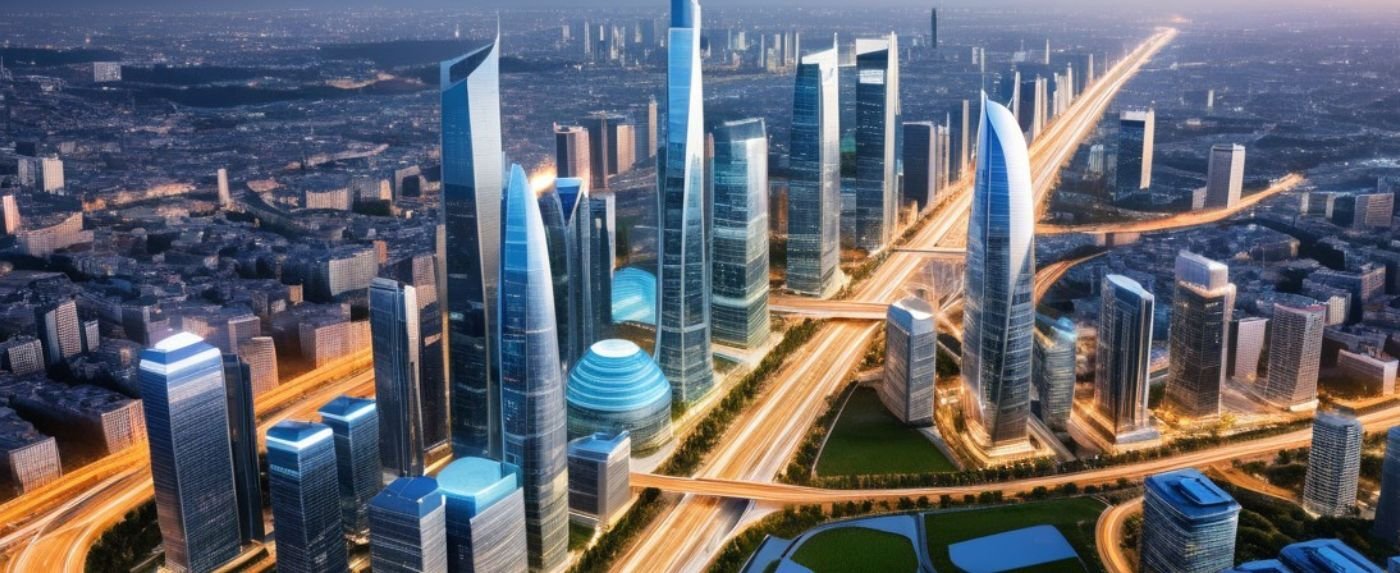
The rapid migration of the global population toward urban centers has created an urgent need for more efficient, sustainable, and livable environments.
Traditional urban planning is no longer enough to manage the complexities of modern life. Today, the real-world implementation of smart city architecture serves as the blueprint for the next generation of human habitats.
Table of Contents
ToggleIntroduction to Smart City Architecture in Practice
Implementing a smart city is more than just installing sensors. It involves a fundamental shift in how we perceive and manage urban spaces. By weaving technology into the very fabric of the city, planners can create systems that learn, adapt, and respond to the needs of residents in real-time.
What Is Smart City Architecture?
Smart city architecture is a multi-layered framework that integrates physical infrastructure with digital technologies. At its core, it consists of four primary layers:
- Sensing Layer: IoT devices and sensors collecting data.
- Network Layer: Connectivity solutions like 5G and LPWAN.
- Data Layer: Platforms that store and analyze urban information.
- Service Layer: The applications and interfaces that citizens and officials use.
Why Implementation Is Critical for Urban Transformation
Without practical implementation, a smart city remains a theoretical concept. Execution is what turns “big data” into “actionable insights.” For instance, a sensor that detects a water leak is useless unless the digital urban infrastructure is connected to a maintenance dispatch system. Real-world deployment ensures that technology solves actual problems like traffic congestion, energy waste, and public safety.
Foundational Framework for Smart City Implementation
Building a smart city is akin to building a digital nervous system for a physical body. It requires a seamless connection between the “brain” (data centers) and the “limbs” (infrastructure).
Integrating Digital Systems with Physical Urban Infrastructure
The first step in urban technology implementation is the “retrofitting” of existing physical assets. Streetlights become Wi-Fi hotspots and environmental sensors. Waste bins become data points that signal when they are full. This integration ensures that the city’s physical growth is always mirrored by its digital capability.
Designing Cities Around Citizen Needs and Urban Use Cases
Technology should never be implemented for its own sake. A citizen-centric urban design focuses on the pain points of the people.
- Commuters need reliable intelligent mobility solutions.
- Families need safe parks and clean air.
- Businesses need high-speed connectivity and stable power.
Building Sustainable and Resilient Urban Ecosystems
Sustainable urban development is the ultimate goal. By using intelligent city technologies, cities can reduce their carbon footprint. Resilient urban systems are designed to withstand climate change, natural disasters, and economic shifts, ensuring long-term viability.
Key Technologies Powering Smart City Architecture
The backbone of any connected city is its technological stack. These tools work in unison to provide a holistic view of urban health.
Internet of Things (IoT) in Urban Environments
The Internet of Things (IoT) is the eyes and ears of the city. From smart meters to traffic cameras, an urban sensor network collects trillions of data points daily. IoT for connected cities allows for “state-aware” infrastructure that knows its own condition at all times.
Network Connectivity (5G / LPWAN / Cellular IoT)
Communication is the lifeblood of digital infrastructure.
- 5G Connectivity: Provides the high bandwidth and low latency needed for autonomous vehicles.
- LPWAN (Low Power Wide Area Networks): Ideal for sensors that need to send small amounts of data over long distances with minimal battery use.
- Cellular IoT: Connects devices across existing mobile networks for wide coverage.
Data Platforms, Analytics & Urban Dashboards
A city data platform acts as a centralized “cockpit.” Here, real-time urban analytics turn raw data into visualizations. City officials use these urban dashboards to monitor everything from water levels to emergency response times.
Edge & Cloud Computing for Real-Time Operations
While cloud computing handles massive data storage and deep learning, edge computing processes data closer to the source. For example, a traffic camera uses edge computing to detect a crash instantly, rather than waiting for the cloud to process the video feed.
Real-World Use Cases: Global Smart City Solutions
How does this look in practice? Let’s explore the intelligent urban projects currently reshaping our world.
Intelligent Transport and Traffic Networks
Intelligent transportation systems (ITS) use telematics in urban systems to reduce gridlock. Smart traffic lights adjust their timing based on actual vehicle flow, reducing idle time and emissions.
Smart Energy Management and Grids
Digital energy management through intelligent power grids allows for two-way communication between utilities and consumers. These grids can integrate renewable energy sources, like solar and wind, more effectively than traditional systems.
Smart Water and Waste Infrastructure
Connected water systems detect leaks in real-time, saving millions of gallons of treated water.13 Similarly, urban waste management systems optimize collection routes, saving fuel and reducing operational costs.
Environmental Monitoring & Air Quality Systems
Environmental monitoring systems use distributed sensors to track pollutants. These air quality monitoring networks provide hyper-local data, allowing cities to issue health alerts or implement “low-emission zones” dynamically.
Connected Public Safety and Emergency Systems
Connected public safety systems integrate video analytics, acoustic sensors (for gunshot detection), and GPS tracking for first responders. This reduces response times and improves situational awareness during crises.
Smart City Case Studies from Around the World
Learning from established leading intelligent cities provides a roadmap for others.
Top Performing Smart Cities & What They Did Right
- Singapore: Known for its “Smart Nation” initiative, Singapore has mastered the use of digital twins to simulate urban planning decisions before they are implemented.
- Barcelona: A leader in urban IoT infrastructure, Barcelona saved billions by implementing smart lighting and parking sensors.
- Amsterdam: Focuses on circular economy and green digital cities, using data to drive energy-efficient housing.
Lessons from Emerging Smart City Projects
In developing regions, emerging urban innovation initiatives often focus on basic service delivery. Cities in India and Rwanda are using smart tech to leapfrog traditional infrastructure, focusing on mobile payments and decentralized water filtration.
Cross-City Comparison: Strategies & Outcomes
City | Primary Focus | Key Technology | Outcome |
Singapore | Digital Governance | Digital Twins | Enhanced planning |
Barcelona | IoT Integration | Sensors/LPWAN | Resource efficiency |
Copenhagen | Sustainability | Smart Grids | Carbon neutrality |
Governance and Multi-Stakeholder Collaboration
A smart city is a collaborative effort. It cannot be built by tech companies or governments alone.
Role of City Governments in Smart Architecture
City authorities must act as the orchestrators. They set the vision, provide the policy-driven urban innovation frameworks, and ensure that technology serves the public good.
Public-Private Partnerships (PPPs) that Work
Most urban innovation solutions are too expensive for governments to fund alone. Public-private partnerships allow for shared risk and investment. Tech companies provide the expertise, while the city provides the scale and regulatory support.
Regulatory Frameworks & Urban Standards
Without regulatory frameworks, data becomes siloed. Digital city governance frameworks ensure that different systems can “talk” to each other and that data usage remains transparent.
Implementation Challenges in Real Projects
The path to a connected city is rarely smooth. Several hurdles can stall even the best-funded projects.
Interoperability and Legacy Systems
Many cities struggle with “siloed” data. Older urban mapping systems often cannot communicate with new city technology platforms. Overcoming this requires open-source standards and modular smart city technologies.
Funding, Budgeting & Economic Barriers
The upfront cost of digital infrastructure is high. Cities must move away from traditional budgeting and toward “value-based” procurement, where the long-term savings in energy or labor justify the initial spend.
Ethical, Privacy & Data Security Concerns
Urban data privacy is a major concern. Residents are often wary of constant surveillance. Cybersecurity in digital cities must be “secure by design” to prevent hackers from hijacking critical infrastructure like power grids or water pumps.
Measuring Success: KPIs & Outcomes
How do we know if a smart city is actually “smart”? We need concrete metrics.
How Cities Track Performance & Impact
Cities use real-time urban analytics to track Key Performance Indicators (KPIs). These metrics are often displayed on public-facing dashboards to maintain transparency with citizens.
Key Metrics: Efficiency, Cost, Sustainability
- Efficiency: Reduction in travel time or emergency response speed.
- Cost: Decrease in municipal energy bills and maintenance expenses.
- Sustainability: Total reduction in $CO_2$ emissions and water waste.
Citizen Satisfaction and Quality of Life Indicators
The ultimate metric is quality of life improvements. This is measured through surveys, sentiment analysis of social media, and the increased usage of digital public services.
Best Practices for Implementing Smart City Architecture
For city planners and tech leads, following a proven path is essential.
Step-by-Step Deployment Roadmap
- Identify Urban Use Cases: Start with a specific problem (e.g., congestion).
- Pilot Projects: Test urban IoT infrastructure in a small district.
- Scale Up: Use the data from the pilot to secure more funding.
- Iterate: Constantly update the urban management software.
Risk Mitigation & Agile Approaches
Cities should avoid massive, “big bang” implementations. An agile approach allows for small failures and quick corrections, reducing the risk of wasting public funds on obsolete tech.
Community Engagement and Co-Creation Models
Community engagement is vital. If citizens feel the technology is being “done to them” rather than “for them,” they will resist. Co-creation involves residents in the design process of inclusive urban development.
The Future of Smart City Implementation
We are only at the beginning of the future of intelligent cities.
AI, Digital Twins & Predictive Urban Systems
AI in connected cities will move from reactive to predictive. Instead of responding to a traffic jam, the city will predict it an hour in advance and reroute traffic automatically. Digital twins will allow for real-time simulations of the city’s entire ecosystem.
Emerging Connectivity Tech Beyond 5G
While 5G is the current gold standard, researchers are already looking at 6G and satellite-based urban communication networks to provide 100% coverage, even in “dead zones” or during disasters.
Inclusive and Equitable Urban Tech Expansion
The goal for the next decade is ensuring that intelligent urban architecture doesn’t create a digital divide. Inclusive urban development means making sure that low-income neighborhoods benefit as much from smart tech as wealthy ones.
Conclusion
The real-world implementation of smart city architecture is a journey, not a destination. It requires a delicate balance of cutting-edge technology, robust urban governance models, and a deep commitment to the well-being of every citizen. By focusing on sustainable urban development and citizen-centric urban design, we can build cities that are not just “smart” but truly wise.
FAQs
Q1: What is a city technology project?
A city technology project is an initiative that deploys intelligent infrastructure, IoT networks, and digital solutions to enhance urban services and optimize city operations.
Q2: What is the main goal of a connected metropolis?
The main goal of a connected metropolis is to improve the quality of life, sustainability, and operational efficiency by using digital infrastructure, IoT, and data-driven urban management.
Q3: What makes digital urban hubs successful?
Digital urban hubs succeed through citizen-centric design, robust IoT systems, real-time analytics, and effective governance frameworks.
Q4: What is the world’s first intelligent urban center?
The world’s first intelligent urban center is widely considered to be Songdo in South Korea, a fully planned city built with integrated IoT, sensors, and digital infrastructure.