
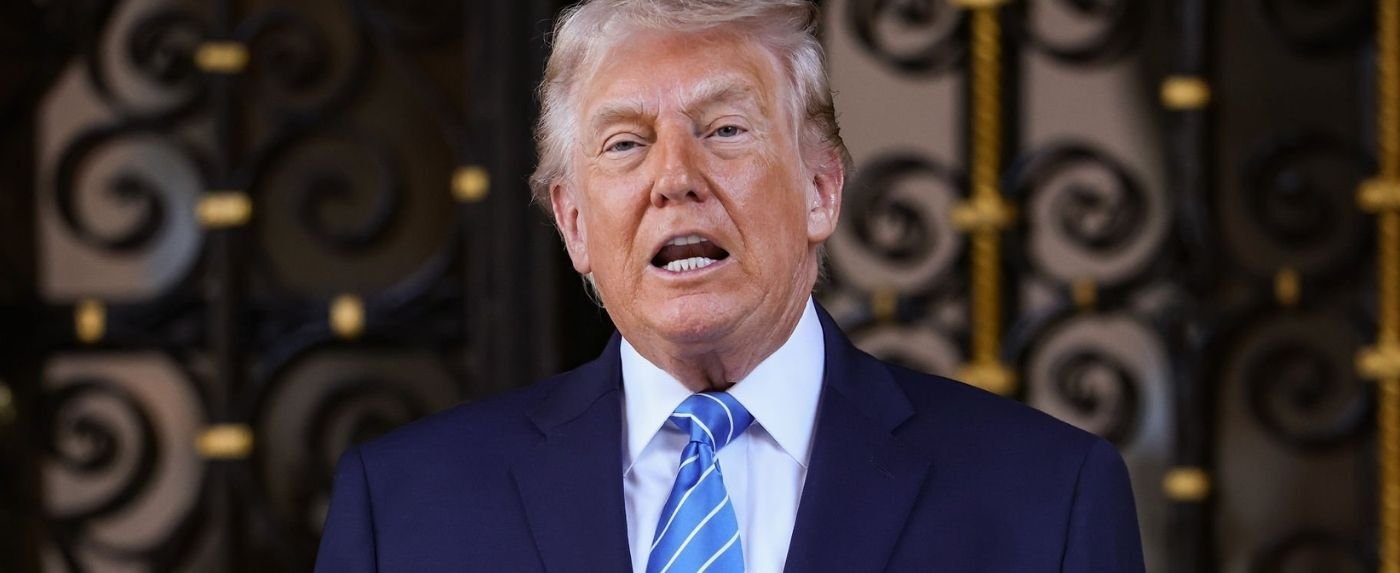
A presidential veto is an instrument that has been deployed to control Congress and retain power over legislative priorities.
Table of Contents
ToggleConstitutional foundation
The president has the authority to veto legislation to make sure that the bills are in line with the executive interests as spelled out by the Constitution.
Presidential veto examples
Previous presidents occasionally used veto power, though the number and political influence of Trump’s vetoes in 2025 will be significant.
Consequences to congressional independence
The challenges of Trump vetoes demand that legislators strike a balance between loyalty to the party and the interests of constituents.
Override requirements
A two-thirds majority in Congress can be used to override vetoes, yet in history, most Trump vetoes thus overridden are uncommon.
Bipartisan tension
Lack of unanimity between parties does not mean the passing of bills, especially when Trump vetoes those that do not support his policy interests.
Trump vetoes and advances conflicts in the legislature
Colorado legislation on water infrastructure
The Finish the Arkansas Valley Conduit Act vetoed by Trump was to finish a pipeline project that had been pending in southeastern Colorado.
Public health importance
The pipeline supplies drinking water to the rural population that faces the problem of scarcity and water contamination.
Political implications
The bill was championed by cCongresswomanLauren Boebert, and it is an example of how Trump vetoes have created regional interests in opposition to executive power.
Miccosukee Indian Reservation in Florida
The bills that Trump vetoes are the Miccosukee Reserved Area Amendments Act, aimed at increasing the area of land that is under protection for the Osceola Camp.
Flood mitigation plans
The act had clauses to finance flood control works and environmental custodianship in Indian lands.
Immigration disputes
Trump vetoed this bill because the tribe was a hindrance to immigration policies, relating domestic law to execution priorities.
The immigration policy debates and Trump vetoes
Border bill controversies
Trump vetoes bills to reform enforcement or fund humanitarian actions, which demonstrate his stern immigration policy.
Congressional challenges
An override effort is a challenge to bipartisan cooperation, and getting the two-thirds vote in each house is a hard task.
Domestic impacts
These vetoes impact those states that are not on the border of Mexico, as they affect the local enforcement organizations and communities that rely on the federal funding.
Immigration-related legislation
Trump vetoes bills on asylum procedures and standards of detention facilities, and stresses presidential discretion in terms of enforcing immigration.
Controversies within detention facilities
The Alligator Alcatraz plant at Miccosukee landing areas generated a rift over federal control and sovereignty issues of the Indians.
Legal challenges
The vetoes, the executive power, and the rights of Indigenous people intersect in a complex way, which can be witnessed with tribal lawsuits that were filed against the decisions of the federal government.
Trump vetoes of defense and national security
Defense bill and NDAA vetoes
Trump blocks defense legislation, including the NDAA, with a focus on financial prudence and congressional riders.
Military funding issues
Vetoes have an impact on operations, troop placements, and equipment, which at times postpones strategic military priorities.
Congressional negotiation
Congress can make compromises or change,u t vetoes usually keep hard executive preferences to the defense policy.
Iran war powers resolution
Trump vetoes bills constraining presidential powers to enter into military conflict with Iran without Congress’s consent.
Separation of powers
The vetoes bring back the constitutional restraints and the power balance between the three arms of government.
Legislative strategy
Presidential discretion can usually override congressional efforts at interfering with military decision-making by casting a veto.
Trump vetoes and foreign affairs conflicts
UN and international measures
Trump vetoes decisions by the United Nations that are not in line with American interests and multilateral treaties, which is indicative of national sovereignty and unilateral foreign policy.
Cynicism of global governance
Vetoes demonstrate objections to the international oversight formation and lay down executive privilege in foreign policy.
Congressional input
Though Congress can issue resolutions, Trump vetoes preserve the powers of the president in international affairs.
Laws and ceasefire resolutions concerning Israel
Trump also vetoes actions by the Israel-related resolutions, such as ceasefire resolutions, which strengthen the executive over diplomatic and security decisions.
Congressional diplomacy
The interventions of lawmakers in foreign policy are often met with barriers of veto, which show the boundaries of legislative authority.
Implications of regional stability
Blocked bills influence the U.S.-Israel relations, the security of the region, and oversight of the foreign assistance programs by Congress.
Trump vetoes tribal and domestic legislation
Miccosukee tribal protection
Trump also vetoes tribal land expansion bills, and this underscores the federal authority versus Indigenous sovereignty.
Objectives of environmental protection
Ecosystem preservation, flood mitigation, and alignment with the Everglades restoration projects were listed among the provisions.
Thoughts on cultural heritage
The Osceola Camp is an ancient Miccosukee village, which serves as an example of the larger social importance of vetoed legislation.
Epstein-related legislation
Transparency is questionable since Trump vetoes or blocks initiatives regarding the publication of sensitive documents.
Public oversight concerns
Vetoes have an impact on congressional attempts to access records in Congress, which attracts debates concerning executive accountability.
Ethical and legal implications
The power of executive power is depicted by the influence of vetoes on criminal investigations.
Trump veto and Congress’s strategy
Attempts at override and party politics
Trump vetoes compel legislators to weigh political risk by balancing the override votes with the party loyalty and voter expectations.
Bipartisan cooperation
It is a cross-party effort that is difficult to achieve in a polarized environment to successfully override vetoes.
Legislative adjustments
To minimize the risk of veto, Congress can change bills in advance, changing course based on presidential tastes.
Midterm and local election effects
The impact of Trump vetoes on the electoral strategy is that the presidential alignment of candidates must avoid the interests of the constituency at the cost of the presidential candidate.
Regional responsiveness
Local problems, such as the water infrastructure in Colorado or tribal lands in Florida, can be an impetus to override.
Party cohesion challenges
The dissent in the party can increase when the members find vetoes as non-beneficial to the local or national objective.
Trump vetoes and fiscal policy
Spending and federal priorities
The theme of Trump vetoes is usually based on budget constraints, preventing bills that are perceived to be irresponsible to taxpayers or tax-intensive.
The debates on infrastructure funding
Costly pipelines and flood mitigation projects are among the bills that have been vetoed, with the issue of federal vs. local responsibility being contested.
Economic implications
Vetoes lead to delays, which impact the economic growth, local development, and public services.
Long-term fiscal effects
Trump vetoes are intended to limit the growing federal spending that is an indication of priority in future budgetary cycles.
Congressional response
The legislators have to strike a balance between economic prudence and the constituency’s needs and policy goals.
Policy precedent
Premature vetoes in 2025 establish a structure for future budgetary and expenditure debates.
Patterns of Trump vetoes and history
Occurrence and efficacy
The second term has a higher rate of Trump veto, as they indicate the readiness to exercise executive power aggressively.
Comparison to the former presidents
Although vetoes are not new, the frequency and political effect are unique and differentiate Trump vetoes from previous examples.
Override statistics
Vetoes are rarely overturned, and this proves the hardship that Congress has in confronting the executive powers.
The long-term governance effect
The impact of Trump vetoes on legislation planning, changing political coalitions, and reinventing executive-congressional relationships in 2025.
Institutional implications
To avoid recurrent veto battles, Congress can revisit the bill development and coalition-building.
Evolution of legislation strategy
Law-making in the future can be altered according to the interests of the president, but with checks on the presidency.
Conclusion: Political events that define Trump’s vetoes
The Trump Veto has turned into one of the primary instruments of policy, power, and political policy in 2025.
Through these vetoes, executive authority and its boundaries are evident by refusing bills on infrastructure, defense, immigration, tribal lands, and foreign affairs.
The reactions of Congress in the form of override votes indicate an increased conflict between party loyalty and constituency needs and institutional responsibility.
Finally, Trump vetoes are capable not only of dictating the political fate of particular bills but also of setting the political landscape in a way that affects politics on a wider scale.
FAQs
Q1. Can Trump veto a bill passed by Congress?
Yes. The president can reject any bill passed by Congress, sending it back with objections for reconsideration or override attempts.
Q2. How many vetoes has Biden done?
As of early 2026, President Joe Biden has issued fewer than 15 vetoes, far less than many previous presidents.
Q3. Which president vetoed a lot?
Franklin D. Roosevelt holds the record for the most vetoes, issuing over 600 during his four terms in office.
Q4. Who used the veto 12 times?
Many presidents have used the veto around a dozen times in a single term; for example, early-term vetoes by Grover Cleveland often numbered near 12.